



Your ad was doing its job. Same offer, same audience, nothing touched. Then, over a week or so, every purchase starts costing more and the comments go quiet. You didn’t change anything, so it feels like Facebook did.
Sometimes it did. More often the ad just got old. Here’s how I’d work out which one you’re dealing with, in the order I’d check it.
First, rule out the boring stuff
Before you blame the creative, make sure nothing else moved. A drop that looks like fatigue is often one of these:
- Tracking broke. A site update, a new checkout app or a consent banner can stop purchases from reporting. If orders in your store look normal but Ads Manager shows a drop, it’s the pixel, not the ad.
- The page changed. A price change, a sold-out size or a slower page hurts every ad at once.
- You edited the ad set. Big edits can send it back into learning, and results wobble while it relearns.
- The season turned. Everyone’s costs rise around big shopping weeks. That’s more competition for the same attention, not a problem with your creative.
If every ad in the account dropped on the same day, it’s almost never fatigue. Fatigue is slow, and it hits one ad at a time.
What creative fatigue actually looks like
Fatigue means the people you can reach have seen the ad enough times that they scroll straight past it. You’ll usually see these together, on one ad:
- Frequency keeps climbing while reach flattens out. You’re showing the same ad to the same people.
- Fewer people click, week after week, with no change to the offer.
- Cost per purchase creeps up slowly instead of jumping overnight.
- The comments go stale, or turn into “I keep seeing this.”
If one ad shows all of that while a newer ad in the same account is fine, you’ve found your answer.
Most ads are built to die young
Here’s the part most advice skips: fatigue isn’t a rare failure. It’s normal, and the brands you’re up against plan for it.
We track the public Meta Ad Library ads of 40 brands, 2,021 ads in all. Of the 807 ads those brands had already switched off, half were gone within 8 days, and 82% were gone within 30 days.
That isn’t those brands failing. It’s how they work. Liquid I.V. has 219 public ads in our data, and its median ad ran 5 days. Jones Road Beauty has 100, with a median of 6 days. They launch a batch, keep the few that hold up and cut the rest.
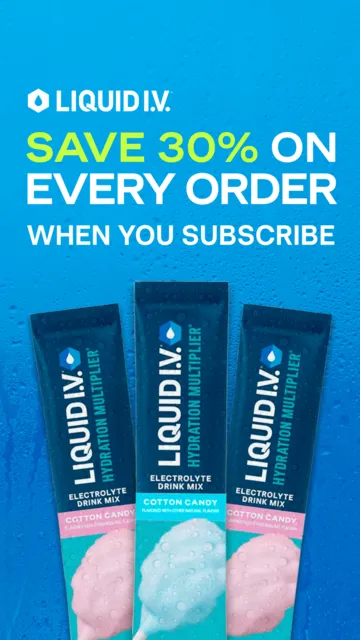
One Liquid I.V. pair shows how it plays out. Two ads with the same headline, “Say Yes to 30% Off Every Order”, went live on the same day. One ran 71 days. The other was cut at 35. Same message, different creative, and only one of them stayed.
And some ads run for months
Not every brand churns. Huel keeps its ads: the median Huel ad has run 113 days, and 38 of its 66 public ads have run 90 days or more. Firmoo has ads that have been live for 482 days.
Those brands didn’t dodge fatigue. My read is that they found a small set of ads that keep reaching people who haven’t seen them yet, and they let those run while they test new ones around them.
So there are two healthy patterns: lots of new ads cut fast, or a few long runners with tests around them. The one that hurts is a single ad you leave alone until it dies, with nothing ready to replace it.
What I’d do when an ad is fatigued
- Don’t just change the color. A new thumbnail on the same idea rarely buys you much. The people who are tired of it will recognize it.
- Change the angle. Same product, a different reason to care: a different problem, a different objection, a different person talking.
- Launch the replacement as a new ad. Editing the tired one resets what Meta’s learned about it. A new ad keeps the comparison clean.
- Have the next ads ready before this one dies. If you only start making new creative after results fall, you’ll always be a few weeks behind.
- Look at what rivals keep running. An ad a competitor has kept live for months tells you which angle holds up in your market. That research is sitting in the Ad Library for free.
How to catch it early
Check frequency and cost per purchase for each ad once a week, not every day. Daily numbers swing. Weekly trends tell you when an ad’s tiring, and give you time to have the next one ready.
Watch your rivals on the same rhythm. When a competitor cuts an ad they’ve run for months, or launches a batch of new ones, that’s a signal about where your category is moving. The Read makes that comparison for the brands you track, every week. If you’re wondering how long a good ad should last in the first place, I’ve written that up in how long should a Facebook ad run.
How we counted
Every number here comes from public Meta Ad Library ads that StealAds has collected, from the day each ad started to the last day we saw it. An ad we saw in the last week counts as still live, so its run length is a floor, not a final number. These are public ads, not ad accounts: we can see what ran and for how long, never what a brand paid or what an ad brought in. Each brand’s ads are on its own page if you want to check them, starting with Liquid I.V.