



It's late, you've got a folder full of competitor ads, and everything you're making looks like something you've already saved. Your designer wants a direction. You want an ad that gives someone a reason to buy. Another mood board isn't going to settle it.
Creative strategy is the plan that connects a customer's problem to your message, your proof and the ad you make. Here's how to build that plan: research the doubt, choose an angle, write the brief, test it and decide what deserves another go.
Study what brands kept running before filling the calendar with more creative. The useful question is what those ads keep saying, and whether you've got something equally clear to say about your product.
Research the reason someone would care
Start with the messages customers send before they buy. Reviews are useful, but the person asking whether a tinted moisturizer will cling to dry patches is handing you an ad idea. They have a specific worry. Your job is to show them the answer.
Read support tickets, return reasons and reviews of competing products. Look for moments of frustration, relief or disappointment. Keep the actual wording. “My foundation catches on the dry skin around my nose” gives you more to work with than a slide labeled convenience. You can picture the scene and brief someone to film it.
Use expertise to answer a real objection. A lab coat is a costume unless the speaker has relevant knowledge and something useful to explain.
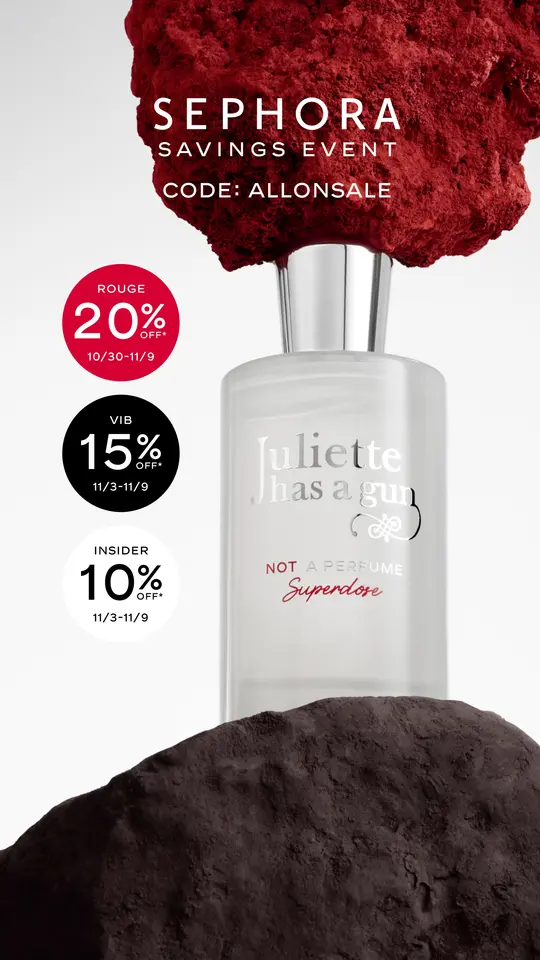
Use the beauty ad examples to compare those choices. A founder explaining why they chose an ingredient has a different kind of authority from someone wearing a white coat. Use the expertise you actually have. Your product designer explaining a tradeoff may be more convincing than an actor trying to sound scientific.
Choose an angle before a format
Brief the angle before the format. “We need more video” gives your team a production task. “Show how the tint looks around dry patches in daylight” gives them an idea to make.
The angle is the reason to care. The hook is how you open. The format is how you deliver it. Keep those decisions separate when you're planning. Otherwise, you'll call a product photo, a founder video and a customer quote different concepts even though they all make the same promise.
An educational angle gives the customer an explanation they can use. Explain why a moisturizer pills under makeup, then show the amount and application your product calls for. Keep the advice inside what you can substantiate about the formula.
For skincare, start with the question people keep asking before checkout. For a lip tint, show how the shade looks on lips in ordinary light. Choose something the product can visibly answer. Then use the ad hook generator to explore openings. You'll get better lines when you can tell it exactly why the customer should care.

Write a brief someone can act on
A brief should save your designer from guessing. If they have to ask what the ad is trying to say after reading it, rewrite the brief before asking for concepts.
Include the customer situation, the promise, the evidence, the opening and the next action. Add the question you're testing. Give the maker enough product information to get the details right, then leave room for them to solve the visual problem. “Make it premium” tells them almost nothing. “Show the clasp close so the customer can see how it fastens” tells them what matters.
For context on format and run length, StealAds measured beauty ads. Beauty image ads had a median observed run of 13 days, compared with 23 days for video. Put both formats in your research folder. Decide which makes your particular proof easiest to understand.
Here's a tinted-moisturizer brief: speak to someone worried about dry patches; show the finish in daylight; keep the skin texture visible; send them to the shade and application guide. The test is whether seeing the finish answers that doubt more clearly than a bottle shot. Now the designer knows what to make and you know what you're trying to learn.
Test a question you can answer
Before launch, write down what would change your mind. If you think the demonstration is the missing piece, compare it with the current product shot while keeping the offer and destination steady. If you change everything, you'll struggle to explain what to repeat.
Across the public Meta Ad Library ads StealAds measured, 29% reached at least 30 days. Save examples with a history and compare the promise across their variations. Look for the idea that stays while the executions change.
In your own account, give an ad enough delivery to assess the action you wanted. Check purchases against your current ads, and check whether people arriving on the page find what the creative promised. An opening that earns clicks from the wrong customer needs work even when the click numbers look good.
Test meaningfully different reasons to care before obsessing over punctuation. Once a concept holds up, then explore the opening, proof and layout. Keep a plain record of each change. You should be able to open it later and understand why that version existed without asking the person who made it.


Decide what to keep, change or cut
The review needs to end with a decision. Keep an ad that's doing its job. Change a specific weak part when you've got a reason to believe the idea still has legs. Cut it when your account evidence says the next test deserves the room.
A review is only useful if it changes the next brief. Compare the ads a competitor replaced with the ones they kept, then write down the specific question that comparison raises. A disappeared ad tells you nothing about why it ended.
If an ad struggles, watch it beside the landing page. Does the opening promise something the page barely mentions? Is the product hard to recognize? Have you asked someone to believe a claim without showing the detail that would make it believable? Diagnose that break before commissioning another batch.
Write the lesson as an instruction someone can use: “Show the finish in daylight before describing the texture.” That's something your next brief can carry forward. “The blue version won” leaves everyone guessing. Read how long Facebook ads run when you're deciding how age fits into that review. Keep a useful ad running while its replacement earns the right to take over.
Read the evidence without overreading it
We measure public Meta Ad Library ads from their start date to the last day we saw them. Ads seen near the latest observation count as live, so those run lengths can still grow.
The public-ad research covers 10,950 measured ads across 234 brands; the beauty comparisons use 972 measured ads from 13 brands. A fixed selection caps the largest brand's contribution at the next largest brand's ad count.
What this data can't tell you: We don't see what an advertiser paid or what an ad brought in. Run length shows what stayed visible, and the hook, angle and format groups aren't controlled experiments. Use them to choose what to study; use your account to decide what to keep.
Use the static ads guide when the proof fits in a frame, and the UGC briefing guide when someone needs to demonstrate it. Carry the same customer question into either format so your next review has a clear point of comparison.